Episode Transcript
[00:00:14] Speaker A: Near the end of summer, everyone's invited to a fiesta in southwest Colorado.
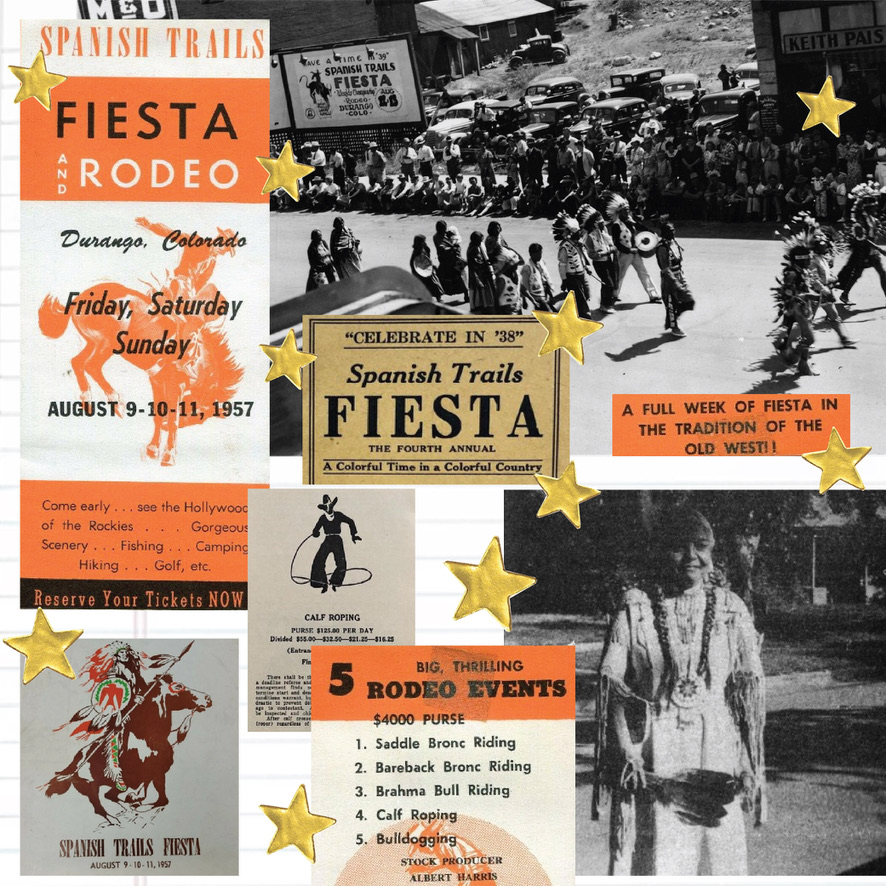
It's called Durango Fiesta Days.
There's a rodeo queen contest, barrel racing and a carnival.
It's one of those times when cowboys and horses take over the La Plata County Fairgrounds.
But there's more to the event's history.
[00:00:44] Speaker B: It was a cultural event to share the cultures, the Anglo, Spanish and native cultures.
[00:00:52] Speaker A: This is Cindy Brevik, president of the Durango Fiesta Days committee. She takes pride in the event's origins, celebrating the region's tri ethnic heritage.
[00:01:02] Speaker B: So a lot of people just think about it being a rodeo and don't remember that it was a cultural blending and recognition and getting along and sharing our cultures. That's what started the whole thing.
[00:01:16] Speaker A: The event dates back to 1935, when it was known as the Spanish Trails Fiesta. Brevik says back then there was more open space in Durango, especially around the fairgrounds.
[00:01:28] Speaker B: The fairgrounds wasn't there. The high school wasn't there, no rec center. Nothing was there except the railroad track and a lot of empty ground.
[00:01:36] Speaker A: When it came time for the fiesta, travelers from around the four corners would gather to set up tents and cook together.
[00:01:43] Speaker B: And people would move around from one camp to the other and enjoy everybody's food. And it wasn't anything that was coordinated, it just happened.
[00:01:53] Speaker A: And Brevik says there was mainly one group of people camping near the Animas River.
[00:01:58] Speaker B: From what I understand, that's where the native people set up their camp, right along the river between the track and where, you know, the end of the fairgrounds is right now.
[00:02:09] Speaker A: It's a distinct image. Indigenous people from nearby tribes setting up tents and building fires after a day at the fiesta. Brevik hasn't seen any photos of these campsites and and she's only heard stories from people who witnessed the camps. It's possible these sites were set up around the present day high school football field and the fairground horse stalls, but we don't really know. Without much proof, it almost sounds mythical, like one of those stories that requires sifting through the murky lore of local history, trying to verify larger than life tales held in a small town. The story also fascinates me because I'm indigenous. I'm a member of the Navajo Nation. Were any of my people camping out at the fiesta? What about people from nearby native nations? So much history of indigenous life remains invisible and undocumented. With only hearsay to rely on, the stories seemed to point toward invisibility.
So I wanted to find someone who actually camped by the river for the Spanish Trail's fiesta? Who were those people? Their stories aren't anywhere.
Before I get to that, there's other fiesta lore to clear up, like, how did this event start? Cindy Brevik has a theory. She believes the event happened organically as a result of people gathering together to. To celebrate our diverse history.
But then there's another explanation.
[00:03:49] Speaker C: Durango Bissenson got together and, long story short, created the Spanish Trails Fiesta.
[00:03:56] Speaker A: This is Robert McDaniel, a local historian.
He says that when the event started in 1935, Durango was coming out of the Great Depression.
[00:04:06] Speaker C: People were out of work. People didn't have money, but business was slow and not just. Not just a business thing or an economic thing, but it lifted spirits.
It was a big party.
[00:04:21] Speaker A: Like Brevik, Robert McDaniel grew up attending the Spanish Trails Fiesta. He also doesn't remember seeing native people camped along the river. The lore intrigued him enough to speculate.
[00:04:33] Speaker C: So they may have been camped up where it was level, which would be some distance from the river. And you have to remember that the railroad tracks are there, too.
[00:04:41] Speaker A: I could theorize and time travel all day with historians, but I still needed to hear from someone who was actually there camping out. Like I said, it's hard to find any documentation of indigenous people camping around the fairgrounds. I searched through news archives, dusty old pamphlets and photographs. I spent weeks sending emails and making phone calls on this quest for an eyewitness account. I kept hitting dead ends.
On my afternoon runs along the river trail. Every time I passed by the fairgrounds, I kept thinking to myself, where were these campers positioned to hear the river wave them good night?
[00:05:27] Speaker C: Yeah. You know where the train track is?
[00:05:29] Speaker A: Then I finally had a breakthrough.
[00:05:31] Speaker C: Just up the bank, all that was empty. And then there are no buildings or anything. Then you could camp there.
[00:05:38] Speaker A: This is Byron Frost, a member of the Southern Ute tribe. He's 74 years old and grew up in Bayfield, east of Durango. Frost remembers attending the Spanish Trails Fiesta in the mid-1950s. He can still recall what the fairgrounds looked like back then.
[00:05:55] Speaker C: The grandstand was on the west side, and yet you had to racetrack around in front of the grandstand on the east side, and further east was the river down below.
[00:06:16] Speaker A: He also vividly remembers camping out with his family near the river.
[00:06:22] Speaker C: You had room on a bank where people camped out on top of. We had to get over there to try to find a spot that we wanted, and that's where we used to camp out.
[00:06:32] Speaker A: Frost says it looked like any other campground. Tents spread out, children playing around while families build a fire for dinner.
[00:06:41] Speaker C: Then when it gets close to dark, then they eat. And then if you want to go to carnival, then you'd go to carnival before it gets too dark. Then get over there and come back and make sure you have your bedrolls ready in a tent, because everybody picks their places in the tent.
And we used to have a real big tent. All of us could fit in. There was maybe five of us, six of us in there.
Best thing was in the morning smelling the bacon and all that. I mean, everybody could smell that bacon cooking.
[00:07:15] Speaker A: Frost recalls seeing people from other tribes in the campgrounds, including the Dine and Apache. Their reasons for camping are unclear.
Byron Frost says his family camped out so they could be near their horses.
Frost comes from a ranching family, and they were actively involved with the fiesta. His siblings competed in the horse races, and his father had a dance group that performed in town.
[00:07:42] Speaker C: He had a pow wow group called the Many Feather Friendship Club.
[00:07:47] Speaker A: The group was set up by the train station in downtown Durango.
[00:07:51] Speaker C: We go down there and dance and sing for the tourists that come in with the train, and that way they know that the Utes are still around.
[00:08:01] Speaker A: The dance group consisted of eight Southern Ute performers, and Frost has positive memories about the group's reception.
[00:08:09] Speaker C: You can tell the tourists are rocking and rolling with the their bodies, listening and watching the dancers.
[00:08:16] Speaker A: It was the Durango Chamber of Commerce that encouraged his father to bring the dance group into town.
That support from the city meant a lot to Frost's father.
[00:08:26] Speaker C: The dancers and my dad and all that, they felt special because it's showing the traditionals to the tourists.
[00:08:42] Speaker A: Even though the city encouraged these cultural performances, Frost says there wasn't any singing or dancing at the campsites.
[00:08:49] Speaker C: Indians were kind of embarrassed to show that tradition out there in the open. Dancing and singing is kind of like maybe we might offend the people there. That's at the rodeo grounds.
[00:09:02] Speaker A: That embarrassment was a result of the US Government's assimilation policies enforced on Native communities from the late 19th century to the mid 20th century. This era included boarding schools and English only education.
[00:09:16] Speaker C: Back in the days with assimilation to the white American culture, we had to not use our language and all that.
[00:09:24] Speaker A: Indigenous people were prohibited from practicing spiritual ceremonies and speaking their language.
[00:09:29] Speaker C: I mean, my parents said, you can't do this in school. You can't talk your language. And they tell you, don't talk your language. You need to talk English. You had to do these to be part of society. So the assimilation kind of took away the thought of us being the traditional type of people that we're brought up to.
[00:09:47] Speaker A: The ramifications of assimilation shaped Byron Frost's childhood in Bayfield.
[00:09:53] Speaker C: So when that happened, it kind of like you forget about the Indianness in you.
[00:10:05] Speaker A: But back at the fairgrounds during fiesta time, Frost and his family had a chance to celebrate their Native culture. Through singing and dancing. His father's group reminded the public of something important.
[00:10:18] Speaker C: So they know that we as youth tribe are here next to the community of Durango as part of the whole ethnic background of everybody living together.
[00:10:29] Speaker A: The dance group was also inclusive, letting white tourists participate in.
[00:10:34] Speaker C: They say, well, we're gonna do the round dance. So all you people come on, we invite you to do the round dance. People enjoy that because they're part of the dancing of traditional Utes.
[00:10:47] Speaker A: And there's a specific reason why Frost's father named his dance group the Many Feathers Friendship Club.
[00:10:55] Speaker C: Because my dad felt that them feathers means all of us together, that we should be as a friend with one another as we dance.
[00:11:11] Speaker A: Keep in mind, this is only one person's story.
We don't know how other Native people felt at the event back in the 1950s.
We still don't know what it was like for Natives back in the 1930s. It's hard to say if we'll ever hear about those other experiences.
For now, those histories remain unrecorded.
Byron Frost's story alone adds more texture to the Spanish Trail's fiesta. And since there were so many attempts by the US Government to erase Indigenous existence, I take delight in hearing a story about Native families traveling to Durango and camping out.
Now, when I run along the River Trail and I pass the fairgrounds, I think of those Native folks camping there once upon a time. It's another confirmation that Indigenous people have always been here, that we will always belong to this land.
This episode is a production of the Magic Southwest. It was written and produced by me.
Graphic design by Jamie Wanczyk.
Additional support provided by Adam Burke and KSUT Public Radio.
Scoring music by River Foxcroft.
Support comes from the Redline Arts center in Denver, Colorado.
I'm Kirby Bennett. We'll see you next time for more stories from the Magic Southwest.
[00:12:50] Speaker C: Sam.