Episode Transcript
[00:00:01] Speaker A: There's a power plant.
[00:00:02] Speaker B: Power plant's over there.
[00:00:03] Speaker C: Oh, that's a power plant.
[00:00:06] Speaker A: The red building, right?
[00:00:08] Speaker B: No, on the other side. Oh, on the other side, I think so.
[00:00:11] Speaker C: This is Rosalie Manzanetis and her mother, Lydia manzanetis. Back in 2022, I met Rosalie and her family. We are standing under a gazebo near the powerhouse in Durango.
They were trying to figure out where their home would have been.
[00:00:28] Speaker B: Right in here somewhere. Yeah. Because Grandma's house, there was an alley between her and where the smokestack is.
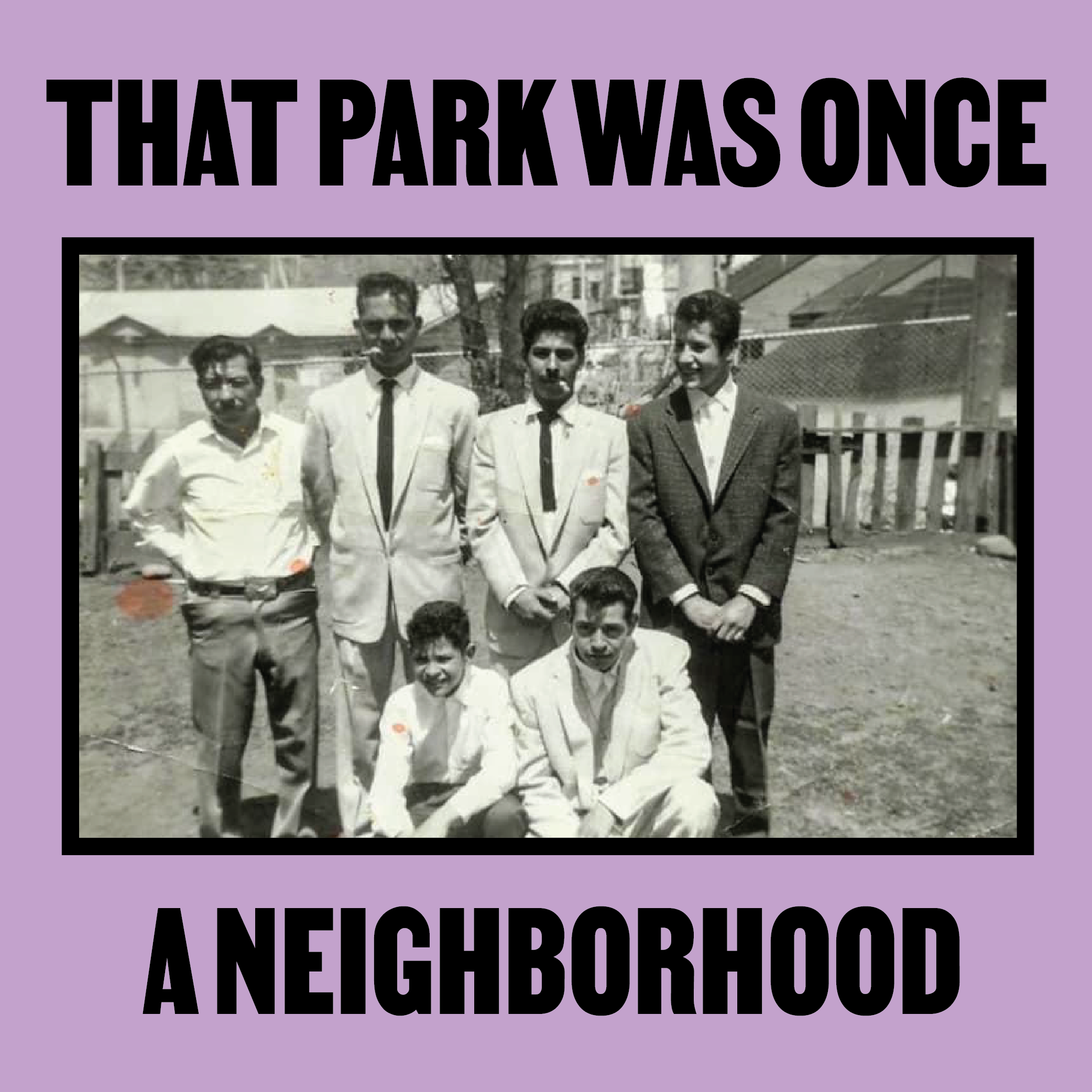
[00:00:34] Speaker C: In the late 1950s and into the 1960s, Rosalie and her family lived in a neighborhood that was once here by the old power plant. There were nearly 20 homes, neighbors with gardens and chickens, children running around.
Today there's a river trail and a park here. In the mid century, this neighborhood was called La Planta.
[00:00:57] Speaker A: And they called it the Planta because the Planta is like the plant. So that's a power plant. So they named the neighborhood La Planta.
[00:01:06] Speaker B: And we don't know who named it that if we named it that, because that's how you describe to somebody. Oh, we're down by the Planta. So this just became. Everybody just referred to it as the Planta because of the power plant.
[00:01:18] Speaker C: La Planta was a predominantly Spanish speaking neighborhood.
Many of the people who lived here came up from northern New Mexico. Rosalie says she can trace her family's ancestry through the Southwest all the way to Spanish colonizers from the 1700s.
[00:01:35] Speaker B: When people tell me, go home, I say, I am home.
What do you mean go home?
What you talking about?
[00:01:44] Speaker C: Her family eventually made their way to Durango for sheep herding and mining and landed in La Planta, a working class neighborhood along the Animas river, during the 1950s.
[00:01:55] Speaker A: At least 15 years. Oh, wow.
[00:01:59] Speaker C: In La Planta.
[00:02:00] Speaker A: Yeah.
And we had the only house that had running water and a toilet and all that stuff. The rest of them were all from a pump.
[00:02:10] Speaker C: Even though the rest of Durango had running water and electricity. In the 1960s, La Planta lacked those amenities. All the neighbors had their own porta potties next to their homes, and most of the homes weren't painted. Rosalie's uncle Sal jumps in.
[00:02:27] Speaker D: Most of the homes had that dark wood on them because they. They weren't painted.
There are a couple of them, maybe they were painted, but not very many.
Just kind of cheap homes.
[00:02:37] Speaker B: But they were nice inside because everybody fixed them up.
[00:02:40] Speaker A: You know, they wallpapered and did what they had to do to live in them. But we Even read a one time we read where this lady made the comment that they were just old shacks.
Well, to them, they were old shacks. For us, they were homes.
[00:02:56] Speaker B: They were home. That was our home.
[00:02:57] Speaker C: And the homes, they were situated right along the Animas River. Rosalie says those years were hard for the family, but they were idyllic, too.
[00:03:06] Speaker B: Dad used to literally fish off the back porch and he'd dry in the fish and she would clean them up and we'd eat them.
[00:03:13] Speaker A: He would fish sometimes early in the morning before he went to work.
And then of course, in the evening, he was out there in the middle.
[00:03:20] Speaker C: Rosalie could hear the river from her bedroom.
[00:03:24] Speaker B: I always remember just laying down and I could fall asleep so easy because you just heard the. You'd hear the water hitting the rocks all night long. And that was just very comforting. And I missed it for many, many years. So even just sitting here now, this seems to. I want to see my dad out there fishing, but he's not there.
[00:03:42] Speaker C: La Planta wasn't the only working class neighborhood along the river. There was also Chihuahua, which is where the present day skate park and pickleball courts are, and the Santa Rita neighborhood, which is where present day St. Rita park is.
Many of Rosalie's extended family lived in these neighborhoods. But in the late 1960s, all of these neighborhoods were turned into parks, displacing these communities.
[00:04:08] Speaker A: Yeah, I think everybody was shocked.
[00:04:11] Speaker D: We're tearing it down. So everybody got out of here.
[00:04:15] Speaker C: It's hard to find exactly when the Laplanta neighborhood was dismantled. But the Chihuahua neighborhood, they were given 30 days to leave their homes in 1964, according to an article in the Durango Herald archives. The article called the residents squatters, even though many families owned their homes or paid rent.
Rosalie's aunt lived there during this time.
[00:04:41] Speaker B: And I think for like my aunt Cecilia, she had a house across the river. She said it was hard for them because they owned it and they were. And she said a lot of people weren't even given an opportunity to get their stuff out. They gave them like a.
Maybe a couple of days notice that they had to find a place to live and all this. And they said they actually came and tore a lot of them down with their belongings inside. So a lot of people lost their belongings.
[00:05:04] Speaker C: By the spring of 1968, the former Chihuahua neighborhood became an RV park. Rosalie's immediate family had moved to California for work a few years before the evictions.
So she didn't witness these events, but she and her mother, Lydia, saw the Impact on the family.
[00:05:22] Speaker B: It's sad.
[00:05:24] Speaker A: It's sad to be here now, you know, because, I mean, it's nice. You like the area? They look really nice.
But it's sad to think that all that we had is all gone. You know, everything's changed. Everything's changed.
The town has changed.
[00:05:41] Speaker C: For Rosalie, being here in the park, it brings up a lot of emotion for me.
[00:05:45] Speaker B: It's like I'm so happy, and, you know, as a child, I could feel all those feelings of just everything, everybody. The smell of the river, the sound of the water, those kinds of things.
For her, it's a little sadder because dad's not with us now, so, you know, it's her first trip here without him. But it's just. And I don't want to talk about it, because I would cry.
[00:06:13] Speaker C: In 2022, Rosalie's father died of brain cancer. But he isn't the only one in her family who has had cancer.
[00:06:23] Speaker B: My grandpa, he had skin cancer.
My dad's sister had breast cancer.
My mom's sister passed in 2025 of oral cancer.
[00:06:46] Speaker C: She has a cousin and her dad's sister who. Who both died of breast cancer.
[00:06:53] Speaker B: My grandmother Tina had lip cancer, cervical cancer, bladder cancer.
My cousin Connie had metastatic breast cancer, and she died at age 50.
[00:07:10] Speaker C: Connie's sisters, who also grew up in these neighborhoods, are currently battling colon cancer and a brain tumor.
[00:07:24] Speaker B: My grandfather, my mom's dad, had lung cancer. He worked in the coal mine.
My uncle Eddie passed in 2022. He was 77 in pancreatic cancer.
My uncle Sal is still alive and he had prostate cancer in 2022 and currently is doing chemo for stomach cancer there.
[00:07:50] Speaker C: Her aunt Teddy was diagnosed with lupus when she was 14 while living at La Planta.
Eventually, she lost a kidney and died when she was just 26 years old.
[00:08:04] Speaker B: And then myself, at age 65, I was diagnosed with breast cancer.
[00:08:15] Speaker C: While digging into these old histories over the years, this isn't the first time I've heard about families experiencing cancer clusters who grew up in these neighborhoods.
Here's rosalie back in 2022 at the park.
[00:08:29] Speaker B: Why do we all have cancer? We all drank out of the same well, and nobody's ever looked into that. So sometimes I wonder if somebody just wanted a floor, flush all this area out once, you know, people started getting really ill.
I don't know.
[00:08:42] Speaker C: Over the years, I've stayed in touch with Rosalie, and this concern has grown, especially as more and more of her family have been diagnosed with cancer. I did an interview with her recently, and she reflected on the state of the old neighborhoods more.
[00:08:58] Speaker B: Why is it and how is it that so many people in our family have cancer? It's like there aren't a lot of families that have like 10 brothers, sisters, and five or six of them all have cancer, or both your parents have cancer. You yourself can't, and you all lived in the same area and you all live by smelter and you live by the plant.
[00:09:21] Speaker C: These neighborhoods were situated under a coal power plant across the river from a uranium mill and right along the Animas river, which was historically also a dumping site from all the hard rock mining upstream in the San Juan Mountains. Rosalie's family ate fish and swam in the river during this era.
[00:09:41] Speaker B: But I do have some great concerns about the cancer issue. And, you know, did they know that this was happening? Is that why they started moving everyone out?
[00:09:52] Speaker C: Rosalie raises an important question. Unfortunately, it's hard to document if this is why they removed the neighborhoods.
But according to the Durango Herald, City Council did issue an eviction notice for residents in the area. It was part of a cleanup program turning the areas along the river into parks.
[00:10:13] Speaker D: If the whole town of Durango was sort of an environmental sacrifice zone, they were the ground zero of that sacrifice zone because they were right there in the center of it.
[00:10:23] Speaker C: This is Jonathan Thompson. He's an award winning journalist and and author who covers energy development and pollution in the Southwest. He also wrote the river of Lost Souls, a book documenting the Animas River's extractive mining past. We are standing on the river trail near the powerhouse in Durango. This is where the old Laplanton neighborhood once was.
[00:10:46] Speaker D: The riverside was not like the beautiful parks and sort of soul of the town back then. It was the industrial heart.
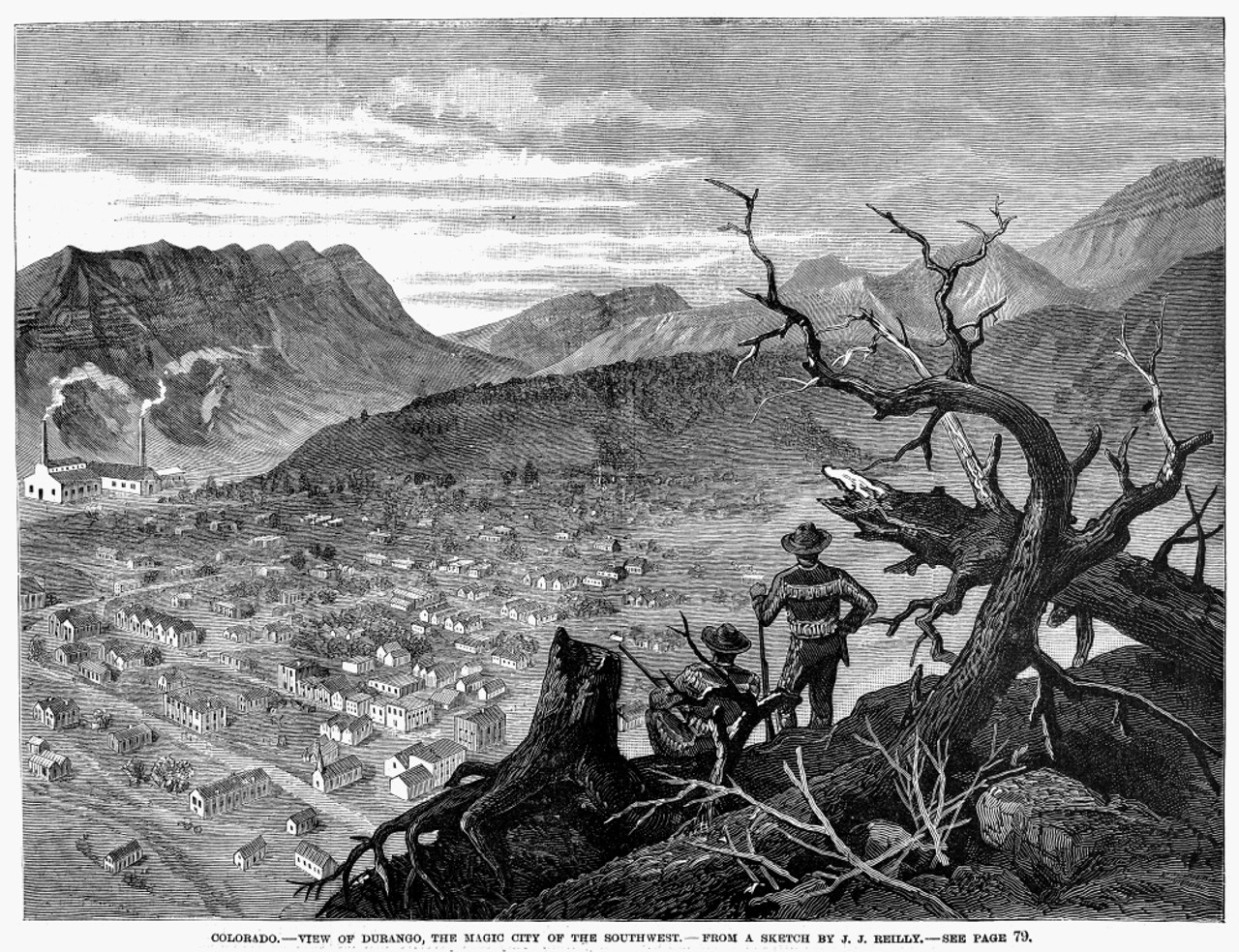
[00:10:56] Speaker C: When Durango was founded in 1880, the river became the industrial corridor. These industries needed water for their operations and so they could pull it straight from the Animas.
[00:11:08] Speaker D: But probably a bigger reason is because the river makes a great dumping ground.
[00:11:12] Speaker C: In 1943, the Durango Uranium mill was secretly built along the Animas river for the Manhattan Manhattan Project.
During the Cold War, the Vanadium Corporation of America processed uranium and dumped the waste material still radioactive into the river. The Santa Rita neighborhood was directly across the river from this operation. This is where Sal, Rosalie's uncle, you heard from earlier, grew up.
[00:11:38] Speaker D: And so you ended up getting neighborhoods in there that where the people who, you know, maybe couldn't afford something, something else, they couldn't afford to live up on the boulevard in what we now consider the historic part of town.
They ended up on the.
Near the river.
[00:11:54] Speaker C: These communities along the river were on the front lines of these toxins and carcinogens a decade before these neighborhoods were dismantled. There are records of public health officials starting to sound the alarm.
[00:12:07] Speaker D: Well, actually there was a public health guy who came in in the 50s and he was like, he looked around and was like, what the heck's going on here? This is crazy.
[00:12:17] Speaker C: That public health doctor's name was George Moore. Moore and his team found radioactive waste along the Animus, and that waste was directly across the river from some of these neighborhoods.
[00:12:30] Speaker D: And he was just kind of flabbergasted by everything that was going on. Like the water systems were terrible, but especially the uranium mill.
[00:12:39] Speaker C: Moore's team analyzed the mounds of radioactive tailings on the bank of the Animas.
[00:12:45] Speaker D: He found high levels of uranium, radon, radium, heavy metals.
The fish were not in good shape.
[00:12:53] Speaker C: These were the fish that the Manzanetas family were eating, the river they were swimming in.
Eventually, Moore's team did tests of all the way down the river to Farmington, New Mexico, and found extremely high levels of radiation in the fish and algae. But these studies, they paid no attention to the humans living right across from the mill.
[00:13:16] Speaker E: The things that's been really interesting in my own research is seeing how in particular after some of the nuclear testing, how animals in particular were studied in ways that people were not studied.
[00:13:30] Speaker C: This is Mariah Gomez. She's the author of Nuclear Nuevo Mexico, which is a book about how New Mexicans were impacted by the Cold War and the nuclear industrial complex.
She says people were not paid very close attention to in terms of the long term and short term effects of exposure to radiation.
[00:13:51] Speaker E: And when you pay close attention to who these communities are and what types of people comprise these communities, it lays a really clear argument for environmental racism because these communities are oftentimes and predominantly communities of color, whether they're indigenous communities or especially in southern Colorado and northern New Mexico, Hispanic communities.
[00:14:15] Speaker C: Gomez says people living in Durango during the mid century were directly impacted by the nuclear industrial complex during the Cold War. Between tests in Nevada and New Mexico to uranium mining in the Four Corners and, and the uranium mill in their backyard.
[00:14:33] Speaker E: These sort of compounded legacies of nuclear colonialism. When you think about the uranium mining coupled with the downwinder communities because of the Nevada test site, Southern Colorado really got slammed and continues to get slammed by the, the nuclear industrial complex and
[00:14:56] Speaker C: the people on the front lines of this region's Nuclear legacy were people like Rosalie and her family,
[00:15:05] Speaker E: the people living in and around Durango who were impacted by uranium mining. Whether they were miners themselves or people who were living and playing in water or drinking contaminated water, or miners bringing tailings or dust particles home to their families, those are the people that are impacted by all of this that haven't typically been considered downwinders.
[00:15:42] Speaker C: Currently, the Radiation Exposure Compensation act is a federal law that provides a one time lump sum for individuals who, who developed certain cancers that were linked to nuclear weapons testing and uranium industry work. But there are limits to this funding and it doesn't cover people who lived within close proximity to this legacy.
[00:16:06] Speaker E: The government has actually put the onus on individuals and communities and having to prove that they were impacted.
And frontline communities shouldn't have to do that 81 years later. We should shouldn't have to say, you know, our illnesses are a direct result of the nation's nuclear weapons program.
[00:16:27] Speaker C: Today, these neighborhoods where Rosalie and her family lived are parks, pickleball courts, and green spaces.
There's even a whitewater park for river enthusiasts where radioactive waste was once dumped directly into the river.
And there's a dog park where towers of waste once sat for decades blowing in the wind.
In the late 1980s and early 1990s, the federal government conducted a cleanup of the area and all the nuclear waste was trucked away to a holding facility above town.
And today there's one small sign on the river trail that commemorates our toxic legacy.
[00:17:23] Speaker E: It's a difficult situation because there is an amnesia around uranium mining in Durango. Nobody really thinks about it anymore. Not a lot of people know the history of uranium mining in Durango and in Colorado. And I think that those are the types of historical legacies that we really need to be examining closely in this day and age.
So it's sort of a two pronged approach.
One is to fight for the justice of what happened, you know, 50, 60, 70 years ago and prevent new uranium mines from opening in our communities.
[00:18:08] Speaker C: President Trump is fast tracking uranium mining in the region.
And Gomez says, we can't forget what's happened in the past to these communities in the Southwest.
Today, this history lives in the bodies and hearts of descendants.
While sitting in the park that was once her childhood home, Rosalie worries that we've already forgotten about this toxic legacy.
[00:18:43] Speaker B: And like when I was in Durango and I see all these people laying on the grass and in my mind I'm saying, they don't know what went on and the plant's gone now, so why would anyone new even think about it?
And Smelter has been closed down, so why would anybody in that side of town worry about it? Because all that's closed. It's not visible to the eye anymore.
[00:19:35] Speaker C: Rosalie lives with her family in California and it's not clear if she and other residents are eligible for federal compensation for their illnesses, but she continues to advocate for herself, her family and other families connected to these neighborhoods.
This was a production of KDUR Community Radio and the Magic Southwest Podcast. These episodes were written and produced by me, editorial support by Maeve Conrad at Rocky Mountain Community Radio, archival research and support from Kirby Bennett and special thanks to Jonathan Thompson and Mariah Gomez to the City of Durango Arts and Culture Grant and Redline Arts and Society in Denver. And thank you to Rosalie, Lydia and the Manzanetas family for sharing your stories with us. To learn more, you can visit themagicsouthwest.org for KDUR in the Magic Southwest Podcast, I'm Jamie Wanczyk.